Sunday, 28 May 2017

There is nothing this world needs more


The below quote is taken from Sheri Dew's April 1999 general conference talk

"Is it possible to be happy when life is hard? To feel peace amid uncertainty and hope in the midst of cynicism? Is it possible to change, to shake off old habits and become new again? Is it possible to live with integrity and purity in a world that no longer values the virtues that distinguish the followers of Christ?

Yes. The answer is yes because of Jesus Christ, whose Atonement ensures that we need not bear the burdens of mortality alone. There is nothing this confused world needs more, nothing that inspires a greater sense of well-being, nothing that has greater power to strengthen families than the gospel of Jesus Christ. President Howard W. Hunter said, “Whatever Jesus lays his hands upon lives. If Jesus lays his hands upon a marriage, it lives. If he is allowed to lay his hands on the family, it lives.”3 The Savior will do for each of us what He has promised to do—if we will have faith in Him and receive His gift."

Thursday, 20 April 2017

A study of Easter and the infinite Atonement of Jesus Christ

My Easter Sunday talk - April 2017

NOTE: Most of this was taken from BYU Professor Andrew Skinner's talks and discussions with his fellow BYU Scholars - https://m.youtube.com/watch?v=3mlMrFhGq6I
https://m.youtube.com/watch?v=3mlMrFhGq6I

PURPOSE: To further BRING TO LIFE this Easter journey and for us all to ponder how miraculous it is that Jesus Christ's love for us is greater than the agony, he suffered, in the Atonement.

INTRO

We begin on a THURSDAY NIGHT in the upper room of a house in south Jerusalem.  

Many important things take place in that room but probably one of the most important events was that CHRIST INTRODUCED AND ADMINISTERED THE sacrament there. 

After JUDAS leaves the remaining 11 DISCIPLES and Jesus walk through the quiet streets to the CITY GATES.  They DESCEND DOWN THE TEMPLE MOUNT, crossing a little brook in the narrow Kieron Valley and enter the LOWER WESTERN END OF THE Garden of Gethsemane. 

Gethsemane, part of an olive vineyard, was near the Jerusalem cemetery and opposite the Temple.  We know there was a FULL MOON that evening (owing to the Time of the Jewish Passover) and as Brother Andrew Skinner explained:

QUOTE:It is quite possible, as some have suggested (assuming no cloud cover), that the full moon cast the shadow of the Temple over the garden near the graveyard. Jesus and the apostles thus made their way to Gethsemane in the shadow of the Temple by a place of death. Such a scene could not have done other than serve as a foreboding reminder to the Savior of his impending fate and infuse the atmosphere with increasing gloom." 

We then read in MARK 14:32-34

32 And they came to a place which was named Gethsemane: and he saith to his disciples, Sit ye here, while I shall pray.

33 And he taketh with him Peter and James and John, and began to be sore amazed, and to be very heavy;

34 And saith unto them, My soul is exceeding sorrowful unto death: tarry ye here, and watch.

35 And he went forward a little, and fell on the ground, and prayed that, if it were possible, the hour might pass from him.

36 And he said, Abba, Father, all things are possible unto thee; take away this cup from me: nevertheless not what my will, but what thou wilt.

I want to spend a few minutes analysing elements of this scripture to highlight the Saviours great suffering in Gethsemane.

1) SORE AMAZED 

In MARK 14:33 we read He began to be sore amazed and very heavy.

Another translation would be TERRIFIED Surprised 

WHAT WAS CAUSING HIm to feel this way?

QUOTE: "...Jesus was weighed down with he sin, sorrow and sufferings of the entire human family.  It was an experience that only a God could withstand and not succumb to death" - Brother Skinner

"Christ's agony in the Garden is unfathomable by finite mind, both as to intensity and cause... In that hour of anguish Christ met and overcame all the horrors that satan, the prince of this world, could inflict" - James Tamage - Jesus the Christ 

7 Billion people are alive today, they estimate 107 Billion people have lived, yet alone those to come and those beyond this world  ( Consider MOSES scripture  "worlds without number have I created") Imagine one of your most painful moments and multiplying it by 100 billion and yet that doesnt even begin to cover what our Saviour suffered that night! (2 Npehi 9:7  it must needs be an INFINITE atonement)

ALMA 7:11 EXPLAINS it was more than just sin - pains, afflictions, temptations of every kind, sickness, infirmities..."

2) FELL AND PRAYED 

IN MATTHEW 26 we read, that three times he "FELL ON HIS FACE AND PRAYED" the same prayer asking.  "Oh my father if it be possible, let this cup pass from me" 

QUOTE: "He fell and prayed, he fell and prayed, he fell and prayed - It is almost as though he is trying to find any restbite from this intensity and yet it will not leave, it keeps getting heavier and heavier bearing down on him and now I think we understand the parallel  BETWEEN THE SAVIOURS EXPERIENCE AND THE PLACE THAT IT OCCURS" - Brother Skinner 

3) GETHSEMANE - Literally means "Oil Press" 

When the olives are crushed the initial colour of the oil is of a blood red hew.  This is very Symbolic of the Saviours experience (who's personal testimony, of what he went though, we are so blessed to have);

DC 19:15 ...how sore you know not, how exquisite you know not, yea, how hard to bear you know not... Which suffering caused myself, even God, the greatest of all, to tremble because of pain, and to bleed at every pore, and to suffer both body and spirit—and would that I might not drink the bitter cup, and shrink—Nevertheless, glory be to the Father, and I partook and finished my preparations unto the children of men."

PRESIDENT NELSON "...Remember just as the body of the olive, which was pressed for the oil that gave light, so the Saviour was literally pressed under the weight of the sins of the world... from every pore oozed the lifeblood of our redeemer.  Throughout the joyous days of your mission, when your cup of gladness runs over, remember His cup of bitterness which made it possible.  And when sore trials come upon you, remember Gethsemane".

4)  HEMATIDROSIS (Bloody sweat) is a rare phenomenon, an American medical association journal, explained "in persons experiencing extreme distress and highly emotional states.  AS A RESULT OF EXTREME STRESS AND PRESSURE, THE small blood vessels just under the skin haemorrhage, blood mixes with perspiration" producing a bloody sweat.

5) ABBA - 
The Aramaic term for Abba (the language Jesus would have primarily spoken) which means "papa or daddy"

 "To miss the significance of the word ABBA at this point in the story of Gethsemane is to miss the TRUE RELATIONSHIP that existed between Jesus and His Father" - Brother Skinner 

It also helps us recognise his desperation and agony as He called out to His Father for relief from such unimaginable suffering!

Elder Holland has beautifully written " In that most burdensome moment of all human history, with blood appearing at every pore and an anguished cry upon His lips, Christ sought Him whom He had always sought—His Father. “Abba,” He cried, “Papa,” or from the lips of a younger child, “Daddy...This is such a personal moment it almost seems a sacrilege to cite it. A Son in unrelieved pain, a Father His only true source of strength, both of them staying the course, making it through the night—together."

......

HIS ARREST - 

MATTHEW 26:45

45 Then cometh he to his disciples, and saith unto them, Sleep on now, and take your rest: behold, the hour is at hand, and the Son of man is betrayed into the hands of sinners.

46 Rise, let us be going: behold, he is at hand that doth betray me.

I can't imagine how difficult it must have been for the Saviour to know that one of his closest friends, a chosen disciple (to which surely Jesus must have seen so much goodness and potential) was the one that led a mob to take Him away.  

Elder Holland said of Judas "The most difficult to understand in this group is Judas Iscariot. We know the divine plan required Jesus to be crucified, but it is wrenching to think that one of His special witnesses who sat at His feet, heard Him pray, watched Him heal, and felt His touch could betray Him and all that He was for 30 pieces of silver. Never in the history of this world has so little money purchased so much infamy. We are not the ones to judge Judas’s fate, but Jesus said of His betrayer, “Good [were it] for that man if he had not been born.”

TRIALS - 

Jesus was taken on 4 different journeys before His final walk, when He bore the cross.  The BYU Scholars mentioned how Jerusalem is a very hilly city and that each of these walks would have been around a mile - all this and Jesus has had no rest after suffering in Gethsemane! 

High Priest - Jesus was first taken to the High Priest where they accused Him of Blasphemy and declared that he is guilty of death" They then spat in his face and beat Him.  They did not have the power to crucify him, that power lay in the Romans' Hands and their representative there was Pontius Piloted.

MATTHEW 27

1 When the morning was come, all the chief priests and elders of the people took counsel against Jesus to put him to death:

2 And when they had bound him, they led him away, and delivered him to Pontius Pilate the governor.

2) Pilate does not believe he is guilty of anything and once he hears that he is from Galilee he sends Him onto Kind Herod as Galilee is his jurisdiction.

 3) King Herod who was the son of the Kind Herod who tired to have him killed as a child!  This King Herod was responsible for the murder of his cousin John which must have been very upsetting for Jesus.  The King was excited to see him as he had heard a lot of Him and was anticipating witnessing one of His miracles nevertheless the Saviour Said nothing to him, so He mocked him and sent him back to Pilate.

4) Pilate said - "I HAVE FOUND NO FAULT IN THIS MAN...NO, NOR YET HEROD..I WILL THEREFORE CHASTISE HIM AND RELEASE him...but they cried out all at once saying, a way with this man, and release unto us Barabbas...they cried crucify Him, crucify Him"

(A FEW SIDE NOTES: Pilate's wife had had a dream and was also certain that Jesus was innocent.  It is possible, as suggested in one of the gospels, that Pilate had Him flogged as a means of satisfying the Jews without having to put Him to death.  There was pressure on Pilate on both sides - the Jew's were trying to convince Him that He was making himself a King above Ceasar which would then put him in a lot of trouble if he did not take this opportunity to dispel this 'potential problem' now while he had the chance.  Pilate then hoped the people would choose Jesus' freedom over Barabbas. (whose name translates, ironically, as "son of the Father") but it seems the High Priests had managed to rally enough support to free Barabbas (who the scholars believe was arrested for being involved in a protest against the Romans).Matthew 27:24 When Pilate saw that he could prevail nothing, but that rather a tumult was made, he took water, and washed his hands before the multitude, saying, I am innocent of the blood of this just person: see yet to it) 

FLOGGED - 

Jesus was then flogged with what we would call a cat of 9 tails.  Leather twangs with pieces of bone and metal within them designed to break the flesh. Jewish law permitted no more than 39 lashes but we have no record of how many lashes they inflicted upon our Saviour.  We know that many of its victims died then and there at the horrific flogging. 

CARRIED THE CROSS - 

We believe men would have only carried the cross piece of the cross as the upstanding stake would have been already in the ground.  WE estimate it would have been around 100lbs.  Consider how exhausted Jesus was from all that has happened, ridiculed and spat upon, flogged and now being forced to carry His own cross on a back that must have been bleeding, broken and raw - the thought of this is just heart breaking.  Even Jesus, who was the son of God at this point needed help to bare His cross, this is reminder of how excruciating this whole experience must have been - and still there is more to come...


CRUCIFIXION - Is a torturous method of extending death, they estimate Jesus suffered on the cross from 9am to 3pm roughly 6 hours according to the gospel of Mark. 

NATURE OF CHRIST - throughout this unbelievable suffering we see time and time again the Saviour is thinking of others -  even to the men that put him on the cross he said "Father forgive them, for they know not what they do" he reassures the dying thieves that suffer beside him, makes sure his Mother Mary has John to look after Her when He has gone and even as he carries His cross up the hilly valley on a bruised and bloodied back he offers counsel to the company of faithful women who follow Him!    What compassion and selflessness and what a great example to us all!

 I cant bear to go into the detail of how painful this must have been but then Elder Holland explains that before the end of his mortal life, there was something even more difficult to come:

"Now I speak very carefully, even reverently, of what may have been the most difficult moment in all of this solitary journey to Atonement. I speak of those final moments for which Jesus must have been prepared intellectually and physically but which He may not have fully anticipated emotionally and spiritually—that concluding descent into the paralyzing despair of divine withdrawal when He cries in ultimate loneliness, “My God, my God, why hast thou forsaken me?”

It was required, indeed it was central to the significance of the Atonement, that this perfect Son who had never spoken ill nor done wrong nor touched an unclean thing had to know how the rest of humankind—us, all of us—would feel when we did commit such sins. For His Atonement to be infinite and eternal, He had to feel what it was like to die not only physically but spiritually, to sense what it was like to have the divine Spirit withdraw, leaving one feeling totally, abjectly, hopelessly alone."

Jospeh of Armitha offered his tomb, Nicodemus also came to help prepare his body with enough spices (JOHN 19:39) to make His a royal burial.  They only had uNTIL SUNDOWN to prepare and place his body before Saturday which was the sabbath.

SO WHY DID HE DO ALL OF THIS???

Because He loves us!  As 1 nephi 19:9 said "And the world, because of their iniquity, shall judge him to be a thing of naught; wherefore they scourge him, and he suffereth it; and they smite him, and he suffereth it. Yea, they spit upon him, and he suffereth it, because of his loving kindness and his long-suffering towards the children of men."

The Saviour knows each of us individually and knows what we are capable of - through the Atonement of Jesus Christ He assured all of us a way to have eternal life and to even be Like God (if we desire it). I love Alma 7:13 "Now the Spirit knoweth all things; nevertheless the Son of God sufferers according to the flesh that he...  (7:12) may know according to the flesh how to succour His people according to their infirmities".  The Saviour choose to actually feel and suffer all of our sins sorrows and sicknesses (even though the spirit could have helped him understand them without feeling them) so that He would succour or 'run to us' and help us through every trail in life.

Resurrection - 

LUKE 24: 1 Now upon the first day of the week, very early in the morning, they came unto the sepulchre, bringing the spices which they had prepared, and certain others with them.

2 And they found the stone rolled away from the sepulchre.

3 And they entered in, and found not the body of the Lord Jesus.

We believe these women came early to finish preparing His body for burial and upon seeing it empty they ran back to tell the Disciples. 

The BYU Scholars explain that because of Greek influence, and other factors, the concept of 'resurrection' was not understood.  It was widely believed "the body was a tomb" and so people couldn't understand why someone would be resurrected there had also never been a case of a man raising himself from the dead - this might help explain why his followers were so shocked!

Peter and John ran to find the tomb empty and then Mary follows behind them ...

JOHN 20

11 ¶ But Mary stood without at the sepulchre weeping: and as she wept, she stooped down, and looked into the sepulchre,

12 And seeth two angels in white sitting, the one at the head, and the other at the feet, where the body of Jesus had lain.

13 And they say unto her, Woman, why weepest thou? She saith unto them, Because they have taken away my Lord, and I know not where they have laid him.

14 And when she had thus said, she turned herself back, and saw Jesus standing, and knew not that it was Jesus.

15 Jesus saith unto her, Woman, why weepest thou? whom seekest thou? She, supposing him to be the gardener, saith unto him, Sir, if thou have borne him hence, tell me where thou hast laid him, and I will take him away.

16 Jesus saith unto her, Mary. She turned herself, and saith unto him, Rabboni; which is to say, Master.

Elder Holland writes "On that first Resurrection Sunday, Mary Magdalene first thought she saw a gardener. Well, she did—the Gardener who cultivated Eden and who endured Gethsemane. The Gardener who gave us the rose of Sharon, the lily of the valley, the cedars of Lebanon, the tree of life...One, only one, person could speak her name that way. With that single word all doubt, confusion, and uncertainty was swept away. Mary, in that instant, came to the grand, sublime realization that he for whom she mourned, even Jesus that was crucified, had risen from the dead, just as the angels early that very morning had testified, “He is risen.” (See Luke 24:6.) ... As we approach this holy week—Passover Thursday with its Paschal Lamb, atoning Friday with its cross, Resurrection Sunday with its empty tomb—may we declare ourselves to be more fully disciples of the Lord Jesus Christ, not in word only and not only in the flush of comfortable times but in deed and in courage and in faith, including when the path is lonely and when our cross is difficult to bear. This Easter week and always, may we stand by Jesus Christ “at all times and in all things, and in all places that [we] may be in, even until death,”21 for surely that is how He stood by us when it was unto death and when He had to stand entirely and utterly alone."

I have a testimony of the resurrected Lord Jesus Christ.  I know He lives because I know Him.  I know He leads this Church and I know He did all of this because He loves us and sees within each of us the most unimaginable potential!  We are His sisters and brothers and He gave everything He had to make a fullness of Joy possible for each of us!  I know that without the Atonement we would not have this wonderful mortal opportunity yet alone an eternal life.  I can testify all of this is true because when I follow in the meekness of His Spirt I have peace, I have joy and I have a greater understanding and knowing He is always with me,and that He has suffered all of my personal trials, gives me the strength to overcome all things.  I love how DC 122:7-9 captures this: 

7 And if thou shouldst be cast into the pit, or into the hands of murderers, and the sentence of death passed upon thee; if thou be cast into the deep; if the billowing surge conspire against thee; if fierce winds become thine enemy; if the heavens gather blackness, and all the elements combine to hedge up the way; and above all, if the very jaws of hell shall gape open the mouth wide after thee, know thou, my son, that all these things shall give thee experience, and shall be for thy good.

8 The Son of Man hath descended below them all. Art thou greater than he?

9 Therefore, hold on thy way, and the priesthood shall remain with thee; for their bounds are set, they cannot pass. Thy days are known, and thy years shall not be numbered less; therefore, fear not what man can do, for God shall be with you forever and ever.

I testify that all of this is true and that, because of Him, everything is possible, in the name of Jesus Christ, amen

Wednesday, 20 January 2016

The realities of parenthood

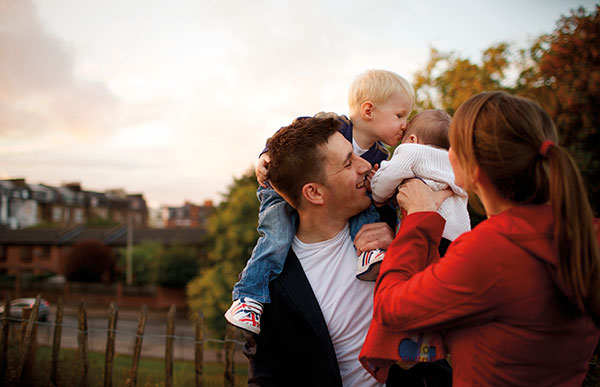
I really enjoyed This article in January 2016's ensign.  I especially appreciated this last line "Bearing children is neither easy nor convenient, but it is a commandment that helps us realize the real blessings of mortality."  Yes, being a parent is difficult it brings the greatest joy but can also bring Distress and sorrow (especially in times of sleep deprivation accompanied by two crying babies) but being able to expand my vision of motherhood (through remembering it is a commandment which therein brings great blessings for obeying and constant help and direction from God, not to mention having the precious knowledge that it is this amazing opportunity to learn and understand the nature of Heavenly Father and develop God like qualities in doing so) makes it an amazing and humbling experience that I am SO grateful for!

Here's the article:

"Reality Number 3: Bearing and raising children helps us develop our capacity to become like God.
young family

At the time He “blessed,” or sealed, Adam and Eve to create the first family on earth,7 God gave them a commandment: be fruitful, multiply, and replenish the earth (see Genesis 1:28; Moses 2:28). Marriage and children go together. The procreative powers that make mortal birth possible are to be used only between a man and a woman, legally and lawfully wedded.8

Adam and Eve understood that bearing children was an important reality of mortality. They obeyed God’s commandment, “and Adam knew his wife, and she bare unto him sons and daughters, and they began to multiply and to replenish the earth” (Moses 5:2). Prophets in our day have declared that “God’s commandment for His children to multiply and replenish the earth remains in force.”9

In today’s world, however, many people no longer believe that “children are an heritage of the Lord” (Psalm 127:3).

Several years ago, a couple who was about to marry came to me. They asked for my advice regarding children. I reminded them of the commandment they would receive when they were sealed, and I counseled them that they could keep this commandment in counsel with the Lord. I reminded them that it is a commandment like tithing, Sabbath observance, or other commandments. Once a covenant is made, the question is not whether to keep it but how to keep it in a way that is pleasing to and approved by the Lord.

I watched as they started their marriage. He had a year left of undergraduate studies, and she had another year in a master’s program. They felt directed to have their family immediately—despite the schooling and uncertainty over future jobs. It was not easy or convenient to have a child so soon. He had to search for a job, they had to move, and she had to finish her degree. They faced stress and sacrifice. He had to rush home each day and watch the baby while she completed her thesis and practical training. She studied and wrote between nursing and changing diapers.

The Lord has blessed and prospered them. While many others lost jobs in the economic turndown of 2008, he was retained and promoted. Because they lived frugally, they are out of debt except for a mortgage, and they have since been able to completely pay for a master’s program with no debt. All the while, they have continued to learn the valuable lessons that can come only with parenthood. Bearing children is neither easy nor convenient, but it is a commandment that helps us realize the real blessings of mortality."

Saturday, 25 July 2015

Written for our day

The Book of Mormon: strengthening our faith in Christ by elder Anderson 

Why would another testament of Jesus Christ be so important for our day? Why would the Lord bring forth another witness to strengthen the powerful declarations of the Bible?


We live in a time unlike any other. Scientific achievement allows medical care, transportation, comfort, and convenience never imagined by generations who preceded us. The earth is flooded with information and technology, enhancing family history work and the sharing of the gospel but also the proliferation of pornography, virtual violence, and other “evils and designs [that] exist in the hearts of conspiring men” (D&C 89:4). In much of the world, we live in a time of strong attachment to material possessions.


These conditions can, if we are not careful, distract or entice us to move away from principles that are eternal and true for every generation.


Thursday, 9 July 2015

40 weeks and 12 days later... Solace from this lovely article "the last days of pregnancy, a place in between"

....I believe that this is more than biological. It is spiritual. To give birth, whether at home in a birth tub with candles and family or in a surgical suite with machines and a neonatal team, a woman must go to the place between this world and the next, to that thin membrane between here and there. To the place where life comes from, to the mystery, in order to reach over to bring forth the child that is hers. The heroic tales of Odysseus are with us, each ordinary day. This round woman is not going into battle, but she is going to the edge of her being where every resource she has will be called on to assist in this journey. - See more at: http://www.mothering.com/articles/the-last-days-of-pregnancy-a-place-of-in-between/#sthash.dBb5hYZK.dpuf..


Monday, 6 July 2015

The will of the Father In All Things - holland


The path to a complete Christian education passes through the Garden of Gethsemane, and we will learn there if we haven’t learned it before that our Father will have no other gods before him—even (or especially) if that would-be god is our self. I assume you are all far enough along in life to be learning that great discipline already. It will be required of each of us to kneel when we may not want to kneel, to bow when we may not want to bow, to confess when we may not want to confess—perhaps a confession born of painful experience that God’s thoughts are not our thoughts, neither are his ways our ways, saith the Lord (see Isaiah 55:8).

I think that is why Jacob says to be learned—or, we would presume, to be any other worthy thing—is good if one hearkens unto the counsels of God. But education, or public service, or social responsibility, or professional accomplishment of any kind is in vain if we cannot, in those crucial moments of pivotal personal history, submit ourselves to God even when all our hopes and fears may tempt us otherwise. We must be willing to place all that we have—not just our possessions (they may be the easiest things of all to give up), but also our ambition and pride and stubbornness and vanity—we must place it all on the altar’ of God, kneel there in silent submission, and willingly walk away.

I believe what I am describing here is the scriptural definition of a saint, one who will “yield to the enticings of the Holy Spirit,” and “through the atonement of Christ . . . becometh as a child, submissive, meek, humble, patient, full of love, willing to submit to all things which the Lord seeth fit to inflict upon him, even as a child doth submit to his father” (Mosiah 3:19).

Monday, 25 May 2015

Cast not away therefore your confidence in regards to facing a vbac :)

We are between 5-7 weeks away from the birth of our second son.  Having had a c-section with Jake I have spent over a year reading and researching on everything that I could do to increase my chances of having a normal natural birth with baby number toe, something that is very important to me.

Most importantly I have been seeking the a lords help through constant prayer and study.  I believe my choices have all been divinely inspired, nevertheless I am fully accepting of whatever comes.  If it is another c-section I know atleast that I have done everything in my power to avoid it, so it must be truly necessary for me and for the baby.

However, I have chosen to remain hopeful that I will attain a vbac.  There is a lot of opposition and so reading elder Hollands talks, for the uptineth time, "cast not away therefore your confidence" has been incredibly powerful in keeping my thoughts optimistic.  I really believe that I can have this healing birth and feel so empowered being reminded that this path I am on has been inspired and I will not give up without a fight or in the words of Joseph smith "shall we not go on in so great a cause?  We go forward and not backward!  Courage... and on, on onto the victory!"


"

Do Not Fear

Lesson number two is closely related. It is that in the process of revelation and making important decisions, fear plays a destructive, sometimes paralyzing role. To Oliver Cowdery, who missed the opportunity of a lifetime because he didn’t seize it in the lifetime of the opportunity, the Lord said, “You did not continue as you commenced.” Does that sound familiar to those who have been illuminated and then knuckled under to second thoughts and returning doubts? “It is not expedient that you should translate now,” the Lord said in language that must have been very hard for Oliver to hear. “Behold, it was expedient when you commenced; but you feared, and the time is past, and it is not expedient now.” 8

Everyone runs the risk of fear. For a moment in Moses’ confrontation with the adversary, “Moses began to fear exceedingly; and as he began to fear, he saw the bitterness of hell.” 9 That’s when you see it—when you are afraid.

That is exactly the problem that beset the children of Israel at the edge of the Red Sea, and it has everything to do with holding fast to your earlier illumination. The record says, “And when Pharaoh drew nigh, the children of Israel lifted up their eyes, and, behold, the Egyptians marched after them; and they were sore afraid.” Some (just like those Paul described earlier) said words to this effect: “Let’s go back. This isn’t worth it. We must have been wrong. That probably wasn’t the right spirit telling us to leave Egypt.” What they actually said to Moses was: “Wherefore hast thou dealt thus with us, to carry us forth out of Egypt? … It had been better for us to serve the Egyptians, than that we should die in the wilderness.” 10 And I have to say, “What about that which has already happened? What about the miracles that got you here? What about the frogs and the lice? What about the rod and the serpent, the river and the blood? What about the hail, the locusts, the fire, the firstborn sons?”

How soon we forget. It would not have been better to stay and serve the Egyptians, and it is not better to remain outside the Church, nor to put off marriage, nor to reject a mission call or other Church service, and so on and so on forever. Of course our faith will be tested as we fight through these self-doubts and second thoughts. Some days we will be miraculously led out of Egypt—seemingly free, seemingly on our way—only to come to yet another confrontation, like all that water lying before us. At those times we must resist the temptation to panic and give up. At those times fear will be the strongest of the adversary’s weapons against us.

“And Moses said unto the people, Fear ye not, stand still, and see the salvation of the Lord. … The Lord shall fight for you.” In confirmation the great Jehovah said to Moses, “Speak unto the children of Israel, that they go forward.” 11

That is the second lesson of the spirit of revelation. After you have gotten the message, after you have paid the price to feel His love and hear the word of the Lord, go forward. Don’t fear, don’t vacillate, don’t quibble, don’t whine. You may, like Alma going to Ammonihah, have to find a route that leads an unusual way, but that is exactly what the Lord is doing here for the children of Israel. Nobody had ever crossed the Red Sea this way, but so what? There’s always a first time. With the spirit of revelation, dismiss your fears and wade in with both feet. In the words of Joseph Smith, “Brethren [and sisters], shall we not go on in so great a cause? Go forward and not backward. Courage, brethren; and on, on to the victory!” 12

God Will Help Us

The third lesson from the Lord’s spirit of revelation in the miracle of crossing the Red Sea is that along with the illuminating revelation that points us toward a righteous purpose or duty, God will also provide the means and power to achieve that purpose. Trust in that eternal truth. If God has told you something is right, if something is indeed true for you, He will provide the way for you to accomplish it. That is true of joining the Church or raising a family, of going on a mission, or any one of a hundred other worthy tasks in life. Remember what the Savior said to the Prophet Joseph Smith in the Sacred Grove. What was the problem in 1820? Why was Joseph not to join another church? It was at least in part because “they teach for doctrines the commandments of men, having a form of godliness, but they deny the power thereof.” 13 God’s grace is sufficient! The Lord would tell Joseph again and again that just as in days of old the children of Israel would be “led out of bondage by power, and with a stretched-out arm. … Therefore, let not your hearts faint. … Mine angels shall go up before you, and also my presence, and in time ye shall possess the goodly land.” 14

What goodly land? Well, your goodly land. Your promised land. Your new Jerusalem. Your own little acre flowing with milk and honey. Your future. Your dreams. Your destiny. I believe that in our own individual ways, God takes us to the grove or the mountain or the temple and there shows us the wonder of what His plan is for us. We may not see it as fully as Moses or Nephi or the brother of Jared did, but we see as much as we need to see in order to know the Lord’s will for us and to know that He loves us beyond mortal comprehension. I also believe that the adversary and his pinched, calculating little minions try to oppose such experiences and then try to darken them after they happen. But that is not the way of the gospel. That is not the way of a Latter-day Saint who claims as the fundamental fact of the Restoration the spirit of revelation. Fighting through darkness and despair and pleading for the light is what opened this dispensation. It is what keeps it going, and it is what will keep you going. With Paul, I say to all of you:

“Cast not away therefore your confidence, which hath great recompence of reward.

“For ye have need of patience, that, after ye have done the will of God, ye might receive the promise.” 15

I acknowledge the reality of opposition and adversity, but I bear witness of the God of glory, of the redeeming Son of God, of light and hope and a bright future. I promise you that God lives and loves you, each one of you, and that He has set bounds and limits to the opposing powers of darkness. I testify that Jesus is the Christ, the victor over death and hell and the fallen one who schemes there. The gospel of Jesus Christ is true, and it has been restored.

“Fear ye not.” And when the second and third and fourth blows come, “fear ye not. … The Lord shall fight for you.” 16Cast not away therefore your confidence.


Tuesday, 12 May 2015

The power of spirituality

Spirituality yields two fruits. The first is inspiration to know what to do. The second is power, or the capacity to do it. These two capacities come together. That’s why Nephi could say, “I will go and do the things which the Lord hath commanded.” 2 He knew the spiritual laws upon which inspiration and power are based. Yes, God answers prayer and gives us spiritual direction when we live obediently and exercise the required faith in Him.

- Elder Scott

Friday, 17 April 2015

The plan of happiness - president Packer April 2015 (extract)

..."

And if you suppose that the full-blown rapture of young romantic love is the sum total of the possibilities which spring from the fountains of life, you have not yet lived to see the devotion and the comfort of longtime married love. Married couples are tried by temptation, misunderstandings, financial problems, family crises, and illness, and all the while love grows stronger. Mature love has a bliss not even imagined by newlyweds.

True love requires reserving until after marriage the sharing of that affection which unlocks those sacred powers in that fountain of life. It means avoiding situations where physical desire might take control. Pure love presupposes that only after a pledge of eternal fidelity, a legal and lawful ceremony, and ideally after the sealing ordinance in the temple are those procreative powers released in God’s eye for the full expression of love. It is to be shared solely and only with that one who is your companion forever.

When entered into worthily, this process combines the most exquisite and exalted physical, emotional, and spiritual feelings associated with the word love. That part of life has no equal, no counterpart, in all human experience. It will, when covenants are made and kept, last eternally, “for therein are the keys of the holy priesthood ordained, that you may receive honor and glory” (D&C 124:34), “which glory shall be a fulness and a continuation of the seeds forever and ever” (D&C 132:19).

But romantic love is incomplete; it is a prelude. Love is nourished by the coming of children, who spring from that fountain of life entrusted to couples in marriage. Conception takes place in a wedded embrace between husband and wife. A tiny body begins to form after a pattern of magnificent complexity. A child comes forth in the miracle of birth, created in the image of its earthly father and mother. Within its mortal body is a spirit able to feel and perceive spiritual things. Dormant in that mortal body of this child is the power to beget offspring in its own image.

Sunday, 15 March 2015

Be not afraid, only believe - ces devotional by Elder Holland, feb 2015

"...Every teacher in this audience remembers the legendary story of Brother Karl   G. Maeser taking a group of missionaries across the Alps by following a homely set of sticks positioned at crucial points on the path, marking the safe way of passage. The sticks weren’t much to look at—all of them irregularly shaped, some weathered and worn, none of them anything to write home about—but their placement, the course they marked, and the silent message their very presence communicated was the difference between life and death. Brother Maeser’s lesson that day was that these sticks were like the presiding Brethren of the Church—some tall, some short, a pretty homely bunch in a beauty contest—but following their path was to follow the path of safety. 20 My point with you tonight is that this is what true doctrine (which is what the Brethren teach) does for us all day, every day. Someonehas to plant those doctrinal guide posts. Someone has to say, “Here is the truth, and here is safety.” Someonehas to guide the way of those who are traveling narrow, often dangerous paths, perhaps for the first time, as many of our high school- and college-age students will be doing. In The Church of Jesus Christ of Latter-day Saints, you are very prominent among the “someones” God has asked to mark the path of salvation.

So, we must skillfully, compassionately share with an individual student, or with society, that course of safety, that sometimes narrow trail of truth, that firm foundation and sure footing upon which if they stand they cannot fall. And a student cannot stand on such sure ground if he or she does not know where it is, and they cannot know where it is unless parents and leaders and teachers like you lead them to it and walk that way with them.

A firm foundation? The sure way? “It is upon the rock of our Redeemer, who is Christ, the Son of God” 21 that every one of us, young or old alike, must build. Why? To what end? “That when the devil shall send forth his mighty winds, yea, his shafts in the whirlwind, yea, when all his hail and his mighty storm shall beat upon you [and your students and your society and your own hopes and dreams, he, the devil], shall have no power over you to drag you down to the gulf of misery and endless wo, because of the rock upon which ye are built, which is a sure foundation, a foundation whereon if men build they cannot fall.” 22

That strength, brothers and sisters, undergirds our position on every question of doctrine, history, or Church practice that can and often does arise as the work unfolds. You have heard those questions. They are not new. They first arose in the neighborhood of Palmyra when the 14-year-old Joseph first reported his heavenly vision, and they continue in one form or another to the present day. We have recently addressed a dozen or so of these issues in a series of essays, desiring to be both accurate and transparent within the framework of faith. Not all gospel questions have answers—yet—but they will come.

In the meantime, I have a question. What conceivable historical or doctrinal or procedural issue that may arise among any group could ever overshadow or negate one’s consuming spiritual conviction regarding the Father’s merciful plan of salvation; His Only Begotten Son’s birth, mission, Atonement, and Resurrection; the reality of the First Vision; the restoration of the priesthood; the receipt of divine revelation, both personally and institutionally; the soul-shaping spirit and moving power of the Book of Mormon; the awe and majesty of the temple endowment; one’s own personal experience with true miracles; and on and on and on? Talk about a question! It is a mystery to me how those majestic, eternal, first-level truths so central to the grandeur of the whole gospel message can be set aside or completely dismissed by some in favor of obsessing over second- or third- or fourth-level pieces of that whole. To me, this is, in words attributed to Edith Wharton, truly being trapped in “the thick of thin things.”

I readily acknowledge the very legitimate inquiries of many who are perfectly honest in heart. I also readily acknowledge that everyone has some gospel question or other yet to be answered. Nevertheless, we would hope, for skeptic, believer, and everyone in between, that humility, faith, and the influence of the Holy Spirit would always be elements of every quest for truth, that foundational truths would always be the reference points in that quest, and that all other issues which may yet need resolving are pursued “by study and also by faith.” 23 At the end of the day, all of us must make distinctions between the greater and the lesser elements of our testimony. For me the greater pillars include those majestic truths mentioned earlier, their irreplaceable centrality in my life, and the realization that I simply could not live, I could not go on without them or without the blessings I have known or without the promises we have all been given in The Church of Jesus Christ of Latter-day Saints.

So, as we speak of questions, write this one from the Apostle Paul across the chalkboard of your mind and instill it in the hearts of your students: “For what if some [do] not believe? [What if they don’t?] shall their unbelief make the faith of God without effect?” 24 The answer to that is “No!” Not in my life! Not in my lifetime! Not for me and my house! No one’s unbelief has or can or will—ever—make my faith in God, my love of Christ, my devotion to this Church and this latter-day work “without effect.” The truthfulness of this latter-day gospel is “in effect,” and it will stay “in effect” as long as the sun shines and rivers run to the sea, and forever after that. Don’t miss those blessings!

In so saying, I add again the witness of that young college-aged institute student who we have been quoting, who grew up to be the President of the Church. That will be followed by the testimony of his marvelous successor, our own beloved President Thomas   S. Monson.

President Gordon   B. Hinckley: “God is at the helm. Never doubt it. When we are confronted with opposition, He will open the way when there appears to be no way.   …

“Let not any voices of discontent disturb you. Let not the critics worry you. As Alma declared long ago: ‘Trust no one to be your teacher nor your minister, except he be a man of God, walking in his ways and keeping his commandments’ (Mosiah 23:14).

“The truth is in this Church. … As the Psalmist declared: ‘Behold, he that keepeth Israel shall neither slumber nor sleep’ (Ps. 121:4).

“He who is our Savior slumbers not nor sleeps as He watches over this His kingdom.” 25

President Thomas   S. Monson: “I testify to you that our promised blessings are beyond measure. Though the storm clouds may gather, though the rains may pour down upon us, our knowledge of the gospel and our love of our Heavenly Father and of our Savior will comfort and sustain us and bring joy to our hearts as we walk uprightly and keep the commandments. There will be nothing in this world that can defeat us.

“My beloved brothers and sisters, fear not. Be of good cheer. The future is as bright as your faith.” 26

With conviction in my heart and eternal gratitude in my soul for the truthfulness of the restored gospel of Jesus Christ, may I close with my own echo of the counsel God has given us more than 100 times in the scriptures—to be not afraid; to be of good cheer. That is my message to you and the message I ask you to convey to your students.

“[Behold,] ye are little children, and ye have not … yet understood how great blessings the Father hath … prepared for you.” 27

“Fear not, … for you are mine, and I have overcome the world, and you are of them that my Father hath given me.” 28

“Ye cannot bear all things now; nevertheless, be of good cheer, for I will lead you along. The kingdom is yours and the blessings thereof are yours, and the riches of eternity are yours.” 29

“Wherefore, I am in your midst,   … I am the good shepherd, and the stone of Israel. He that buildeth upon this rock shall never fall.

“And the day cometh that you shall hear my voice and see me, and know that I am.” 30

That blessing uttered by the Savior of the world I reiterate tonight and pronounce on each of you as if my hands were upon your head. As God is my witness regarding the divinity of this work, so am I His witness of it. This is the truth. In this Church, you and I are engaged in the redeeming, hastening work of the gospel of Jesus Christ. The doctrine is here, the ordinances are here, the revelations are here, the future is here. It is the only sure, safe path for the children of God to follow, including His CES teachers and their students. I delight in the privilege of moving forward side by side with you on such sure, certain, sacred ground. “Be not afraid, only believe.” 31 In the name of Jesus Christ, amen."

Tuesday, 10 March 2015

Doctrinal Certainties


Doctrinal Certainties

Tad R. Callister

“I can live with some human imperfections, even among prophets of God—that is to be expected in mortal beings. I can live with some alleged scientific findings contrary to the Book of Mormon; time will correct those. And I can live with some seeming historical anomalies; they are minor in the total landscape of truth. But I cannot live without the doctrinal truths and ordinances restored by Joseph Smith, I cannot live without the priesthood of God to bless my family, and I cannot live without knowing my wife and children are sealed to me for eternity. That is the choice we face—a few unanswered questions on one hand versus a host of doctrinal certainties and the power of God on the other.”

Tad R. Callister, Sunday School general president, “What Is the Blueprint of Christ’s Church?” (CES devotional, Jan. 12, 2014), cesdevotionals.lds.org.

Friday, 23 January 2015

Time and financial management

An extract from a byu devotional by Elder L. Tom Perry... I was 23 days old when this was given and yet, as with all of these byu devotionals, it's counsel is timeless! 
http://speeches.byu.edu/?act=viewitem&id=556

"Could I counsel you in just two areas? First, in time management. I know of no successful managers of time who do not have a specific plan of how they should use the period of life the Lord has given to them. It is essential that you periodically list the major categories involved in your good use of time—your classes, your studies, your church assignments, recreation, meditation, etc. Then carefully calendar a portion of each day or week to satisfy your needs. Attempt to keep your life in balance.

Then, after the actual performance is over, evaluate and see how successful you were in utilizing your time. Actual performance will form the base for the next planning period. You ought to learn how to use your time while you are in school. It could be one of the major contributions you can make to your life. The second is managing the financial resources our Father in Heaven has blessed you with. Schooling is becoming more expensive each year. I know many of you are laboring under great pressures in order to complete your education. There is always the temptation to borrow to relieve that burden. Sometimes that may be necessary.

I learned a great lesson early in my business career. I was called into my boss’s office one day. He wanted to impress upon me, his financial manager, a good lesson in the use of money. He asked me to give him a definition of interest. Of course, I pulled one out of a textbook I had used in business training. He said, “Oh, no, no, no. This is the one I want you to remember. ‘Them’s that understands it, receives it; them’s that don’t, pays it.’ “

This was one of the great lessons of my life. I have tried to stay out of debt as much as humanly possible. It is a lot more fun to earn interest than to pay it. Develop a positive attitude toward life. Do not let things get you down or become overburdened with meaningless responsibility. Learn how to manage your time and your resources to keep yourself out of trouble. Good planning is the key.,"

Thursday, 22 January 2015

It No Fun Being Poor


Extract from 1982 BYU Devotional 'Its no fun being poor' by Marvin J. Ashton
http://speeches.byu.edu/?act=viewitem&id=33

"IX. Thou shalt not stay poor.
It’s not fun being poor, but no one has to be. With friends, virtue, character, truth, integrity, repentance, and other God-given gifts and rights available, pearls of great price are ours for the seeking. Through prayer and action God helps us avoid being poor. He that has eternal life in its fulness is rich. It’s no fun being poor. It is much more fun to be rich. We can be rich if life’s ledger is filled with daily entries that show bottom-line totals including sound moral conduct, uprightness, and incorruptibility.
X. Thou shalt not allow thyself to be managed by money.
Remember the financially well-to-do are poor only when they allow their money to manage them instead of their managing their money.
There is one other very important ingredient for consideration when we talk about “It’s No Fun Being Poor.” Following the type of thinking I have promoted today, it would not be unusual—in fact, I think it would be quite likely—that, for example, four students who live in a dormitory together could experience this. One could be a little cynical or sarcastic, and, upon opening a cupboard door and looking inside at some of the bare shelves, say, “Don’t forget, we’re rich.” Another might look in the refrigerator and freezer and, upon noting there is more cold than food, could say, “Don’t forget, we’re not poor; it just looks like we are!” Someone else who is convinced beyond reasonable doubt that she is entitled to a new dress or outfit after a long delay, but can’t have them because of a lack of funds could murmur, “I must remember I’m rich.”
A person who allows his money to manage him instead of his managing his money is poor. No matter how much or how little we have to live on each week or month, it needs to be used wisely. We need to work out a budget and live within it. Some claim living within a budget takes the fun out of life and is too restrictive. Those who avoid the inconvenience of budget regulations must suffer the pains of living outside it. Your Church operates within a budget. Brigham Young University functions within a budget. Each department in the school has a budget. The president of the university lives within a budget. Budget guidelines encourage better performance and management. It seems there will always be emergencies and crises in all of our lives that cause financial drain, but even these developments need not make us poor. Having friends, family, neighbors, bishops, stake presidents who care and share makes us rich. Financial disaster can be avoided if we learn with others how to help ourselves. Things generally turn up for those who keep digging. Through work, education, and commitment, personal satisfaction can be realized as we make appropriate use of the accumulation of this world’s goods. No one needs to apologize for his success in financial achievement if the means of attainment have been honorable, and he knows how to wisely use what he has.
Conversely, when money and wealth become our goal and our god, we are poor. I personally applaud those who are honorably successful in achieving an abundance of this world’s goods, but only if it is convincingly evident their money is being wisely used. I could hope and pray that in the future there will be more and more good men and women committed to having more of their money put to use helping some student and less in personal financial assets. No man should be respected just for his riches, but rather by his philanthropy. We do not judge the value of the sun by its height, but for its usefulness.
It is a worthy prayer to ask our Heavenly Father to bless us with this world’s goods, but not with more than we can bear. Too much money can make us poor. Limited budgets can teach us sacrifice, self-reliance, restraint, and personal management. One of life’s great lessons is to teach us that what we do with what we have is more important than what we have. Proper incentive and attitudes prevent us from ever classifying ourselves as poor.
I leave you these thoughts, my love, and my testimony. It’s no fun being poor. Fortunately, none of us has to be. To this truth I leave my solemn witness in the name of Jesus Christ. Amen."

Tuesday, 20 January 2015

What do you envision?

Extract from Elder Kopiske's byu devotional address sept 2014 - 

In a BYU devotional address given almost thirty years ago, President James E. Faust counseled the sisters to be careful not to do everything at once and to do first what is most important for the family, and then other desires can follow. He said, “To every thing there is a season, and a time to every purpose under the heaven.”19Then he said:

It seems that the new roles of women have not decreased their responsibility because, while the new roles are challenging, the old roles of wife and mother are in the soul and cry out to be satisfied. . . . Fortunately [in most cases, I would like to add],women do not have to track a career like a man does. A woman may fit more than one career into the various seasons of life. She cannot sing all of the verses of her song at the same time. 20

Wednesday, 17 December 2014

If ye have love... Jeffrey r holland


“If Ye Have Love One to Another”

I conclude with the most important discipline of all, connecting and converging and conveying the many meanings of all our other disciplines. I speak of discipleship, our devotion to the Father and Son and the gospel they brought, for it is the gospel of Jesus Christ which gives all ultimate meaning to the nets and controls and boundaries that mark the dimensions of the court on which we improve ourselves.

Every year as school starts, I worry through the days and nights, praying you will be safe and happy and successful. We want you to have friends and to feel welcome and to feel loved. And we want you to understand that only you can provide those guarantees to each other. In a world which has some strife and stress and disappointment, we will never have too much friendship or too many arms extended to bear us up and lead us forward. When Christ came to his final days with his disciples, he summarized all that he had said to them in one great reminder, fearing perhaps that when their own disappointments came or when pressures would increase, they might not be able to recall every commandment on every scroll and every teaching from every discourse. He then said, as if there were but one way to remember it all,

A new commandment I give unto you, That ye love one another; as I have loved you, that ye also love one another.

By this shall all men know that ye are my disciple, if ye have love one to another. [John 13:34–35]

The brotherly and sisterly expression of that love is the ultimate test of our loyalty to him. It is our highest form of discipline.

All of us have seen this special miracle work again and again, whether that be in our own lives, in the lives of our family, or in the lives of those with whom we’ve shared some experience. I remember vividly the dreadful circumstance into which a young lady had managed to fall several years ago. She was not a BYU student but was a Latter-day Saint, and yet her very life seemed to be disintegrating before our eyes. As a result of trying to play with the net down, trying to live without rules and without restraint, she was experiencing the moral and spiritual stupefaction of a broken marriage, illicit moral behavior, dark drug abuse, and finally physical violence. She was descending into a personal hell from which no one seemed to be able to retrieve her and from which she personally did not have the wish or the will to turn away.

Her mother and others who had great concern for her had been in contact with me. Her Church leaders had tried to help. All seemed to no avail. The weeks became months, and human life unraveled before our eyes.

Then something happened. A lifelong friend of this young woman contacted her and tried, with love, to open her eyes and touch her heart. When neither her eyes nor her heart seemed to be yielding, this friend, this sister in the family of God who understood Paul’s reminder that when one member suffers all suffer with it, grabbed the lapels of her friend’s heavy winter coat and shook it with all her might. She shook her with all the strength her 105 pounds could muster, and, sobbing, she said through her tears, “Look at yourself. Don’t you see what you are becoming? Look at yourself! I can’t stand it anymore. I love you, and you’re breaking my heart.” At that she let go of the lapels of the big heavy coat and with tears streaming from her eyes turned and ran away.

The young lady whose life was in such jeopardy later recalled for me her response to that encounter. She said, “I don’t know exactly what happened in that moment. Perhaps I am not likely ever to know. I had been talked to by many people, and little of it had meant anything to me. But if I live to be a hundred, I will never forget what I saw with my eyes and heard with my ears as this my childhood friend looked at me with utter anguish and screamed into my soul, “I love you, and you are breaking my heart.”

Today that girl is the beautiful, happy, safe, and productive young woman which she once had been and which surely God meant her to be. She has been remarkably successful in a graduate program at a very good university. She is fully active in the Church, and she is devoted to a life of responsibility and respectability—all because someone in her own way said at the right time and with the right intent that whatever disappointments there had been, these two were forever sisters and disciples of Christ. That stunning declaration not only changed a life, but it quite literally saved this one. We need such brothers and sisters nearby us.

We also need a Father in Heaven who stays by us in our times of necessity and fear. A great Christian writer once said, “God whispers to us in our pleasures, speaks in our conscience, but shouts in our pains: it is His megaphone to rouse a deaf world” (C. S. Lewis, The Problem of Pain (New York: Macmillan, 1967), chapter 6, p. 81). We may find in our lives that God’s love for us may also require a good firm grasp on our lapels.

“By this shall all men know that ye are my disciples, if ye have love one to another” (John 13:35). May God bless us with controlled and disciplined lives during this coming year while we learn and grow and love together. This is a wonderful time in your life and this is a wonderful place to be. Good luck, with the net up, I pray in the name of Jesus Christ. Am

Monday, 24 November 2014

Advice for the full time Mums out there by Elder Faust in 1982


"Homemaking is whatever you make of it. Every day brings satisfaction along with some work which may be frustrating, routine, and unchallenging. But it is the same in the law office, the dispensary, the laboratory, or the store. There is, however, no more important job than homemaking. As C. S. Lewis said, “A housewife’s work … is the one for which all others exist.” ...

Women today are encouraged by some to have it all: money, travel, marriage, motherhood, and separate careers in the world. For women, the important ingredients for happiness are to forge an identity, serve the Lord, get an education, develop your talents, serve your family, and if possible to have a family of your own.

However, you cannot do all these things well at the same time. You cannot eat all of the pastries in the baking shop at once. You will get a tummyache. You cannot be a 100-percent wife, a 100-percent mother, a 100-percent Church worker, a 100-percent career person, and a 100-percent public-service person at the same time. How can all of these roles be coordinated? I suggest that you can have it sequentially.

Sequentially is a big word meaning to do things one at a time at different times. The book of Ecclesiastes says: “To every thing there is a season, and a time to every purpose under … heaven.” 12 There are ever-increasing demands on women that challenge their traditional role of caregivers. But as women, the roles of wife and mother are in the center of your souls and cry out to be satisfied. Most women naturally want to love and be loved by a good man and to respond to the God-given, deepest feelings of womanhood—those of mother and nurturer. Fortunately, most women do not have to track a career like a man does. They may fit more than one interest into the various seasons of life.

I would encourage you sisters to develop all of your gifts and talents to move forward the work of righteousness in the earth. I hope you acquire all of the knowledge you can. Become as skillful as you can, but not exclusively in new careers at the expense of the primary ones, or you may find that you have missed one of the great opportunities of your lives.

Sister Faust and I urged our daughters to get an education, not only to help them in their homemaking but also to prepare them to earn a living if that became necessary. Going to college or a vocational school is a wonderful experience, and the dollars, the effort, and the time prepare the student to have a marketable skill.

I cannot tell you young women what educational skills you should acquire. That is for each of you to decide. You have your agency. Each of you will have to work very hard to learn all you can and develop your talents. It is not easy to achieve anything really worthwhile. I want only to tell you what will bring you identity, value, and happiness as a person. I also challenge you to reach your potential, to become a person of great worth, to become a great woman. Because most of you have the examples of great women in your family, each of you has a model to emulate."